
Nollywood
10 Nollywood Producers Redefining Nigeria’s Film Industry

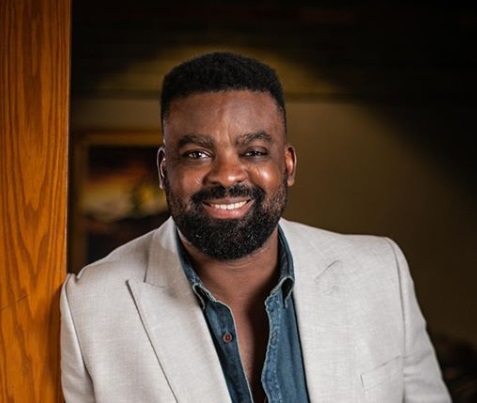
Meet 10 Nollywood producers transforming Nigeria’s film business through innovative production, distribution, financing and global partnerships
Nollywood producers are increasingly moving beyond the traditional business of making films and getting them into cinemas, taking greater control of financing, intellectual property, distribution, production infrastructure and international partnerships.
Also read: Mary Njoku Questions Why Men Avoid ‘Gold Digger’ Label for Wealth Benefits
The shift reflects the rapid evolution of Nigeria’s film industry, where commercial success is now increasingly tied to building audiences, developing recognisable intellectual property and creating businesses that can survive beyond individual productions.

From box-office successes to streaming deals and purpose-built production companies, a new generation of Nigerian producers is helping to redefine the business of filmmaking.
Here are 10 notable names whose work illustrates that transformation.
Funke Akindele
Funke Akindele has turned her considerable popularity into one of Nollywood’s most powerful commercial forces.
Through her productions, she has demonstrated the value of connecting established characters and stories with loyal audiences and creating films that become major cinema events.
Projects including A Tribe Called Judah, Everybody Loves Jenifa and Behind the Scenes have strengthened her reputation as one of Nigeria’s leading commercially successful filmmakers.
Her approach also highlights how an actor’s relationship with audiences can become a valuable production asset when combined with effective storytelling and marketing.
Mo Abudu
Mo Abudu has approached filmmaking as part of a wider entertainment ecosystem rather than as a collection of individual movies.
Through EbonyLife, she has developed interests spanning television, film, streaming, talent development and international partnerships.
Her career illustrates how Nigerian producers can build media companies around African stories while creating opportunities for those stories to reach audiences beyond the continent.
Kunle Afolayan
Kunle Afolayan has consistently pushed for stronger production standards while investing in the infrastructure required to support filmmaking.
His work extends beyond producing individual titles, with his production companies and filmmaking facilities contributing to a broader ecosystem around Nigerian cinema.
Afolayan’s model demonstrates the importance of combining creative ambition with the infrastructure needed to deliver films at a competitive standard.
Jáde Osiberu
Jáde Osiberu belongs to a generation of producers who have embraced the changing relationship between cinema, streaming platforms and digital audiences.
Her projects, including Isoken, Sugar Rush, Brotherhood and Gangs of Lagos, have combined commercially appealing stories with contemporary themes.
Her work has helped demonstrate that Nigerian films can be designed to work across different audience platforms while retaining a distinctly local identity.
Editi Effiong
Editi Effiong has become an important example of how Nigerian producers and filmmakers can develop productions with international ambitions while keeping Nigerian stories at their centre.
His production company, Anakle Films, produced Up North and The Setup, both of which were acquired by Netflix.
Effiong later directed The Black Book, which achieved a significant global streaming milestone by reaching Netflix’s global Top 3.
His trajectory reflects the growing possibilities for Nigerian filmmakers seeking audiences beyond the domestic market.
Toyin Abraham
Toyin Abraham has built a strong presence at the intersection of acting, production and distribution.
Her films have repeatedly attracted significant interest from Nigerian cinema audiences, demonstrating the commercial potential of the actor-producer model.
By taking greater responsibility for the development and production of projects, Abraham has also gained more control over the stories and characters reaching her audience.
Bolanle Austen-Peters
Bolanle Austen-Peters brings her extensive theatre background into film, giving her productions a distinctive emphasis on visual presentation, cultural detail and historical storytelling.
Her approach demonstrates how experience outside conventional film production can enrich Nollywood and introduce different creative perspectives to the screen.
Her work has also reinforced the connection between Nigerian theatre, film and the country’s broader cultural heritage.
Kemi Adetiba
Kemi Adetiba has shown that commercially successful Nigerian cinema does not have to follow a single formula.
Her work on King of Boys demonstrated the potential of politically charged crime drama at a time when romantic comedies were particularly prominent in mainstream Nigerian cinema.
The success and cultural impact of the project helped reinforce the commercial possibilities of stories built around power, politics, crime and social tensions.
Omoni Oboli
Omoni Oboli represents the increasingly influential actor-producer model within Nollywood.
After establishing herself as an actress, she expanded into production and filmmaking, giving her greater involvement in the development and execution of her projects.
Her work has largely focused on romantic and dramatic stories, while also demonstrating how actors can use production to gain greater creative control over their careers.
Charles Okpaleke
Charles Okpaleke has brought an entrepreneurial mindset to Nigerian film production, particularly through Play Network Studios.
A major feature of his approach has been a focus on intellectual property and the commercial possibilities surrounding established Nigerian stories.
His work reflects a broader shift in Nollywood towards treating films and characters not simply as one-off productions, but as valuable creative assets that can support wider commercial opportunities.
The rise of these Nollywood producers points to a wider transformation within Nigeria’s film industry.
Producers are increasingly expected to understand audiences, financing, distribution, technology, intellectual property and international markets alongside the creative demands of filmmaking.
The most successful operators are therefore building more than individual films.
They are developing brands, production companies, franchises, talent networks and relationships with global distributors.
That evolution could prove crucial as Nollywood seeks to compete more effectively for audiences at home and around the world.
Also read: Mary Njoku Questions Why Men Avoid ‘Gold Digger’ Label for Wealth Benefits
The industry’s future may ultimately depend not only on who can make the next successful Nigerian film, but on who can build sustainable businesses capable of producing, owning and commercialising compelling African stories for years to come.




Uzor Arukwe Reveals Why He Is Not a Marriage Advocate

Bisola Aiyeola Says Marriage Is Not Her Life’s Priority

Iyabo Ojo Takes Legal Action Against Lizzy Anjorin


-
 Nollywood4 weeks ago
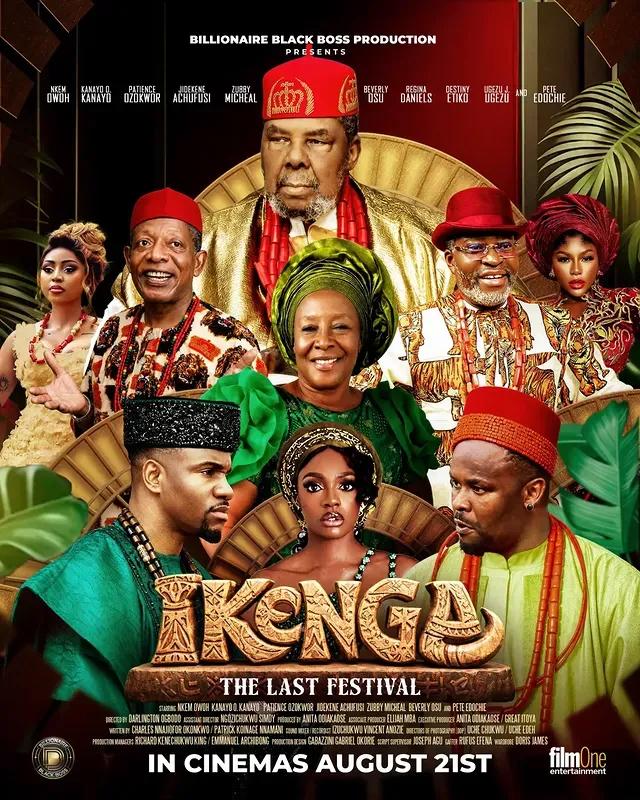
Ikenga Becomes Highest-Grossing Igbo Film at ₦103.4m
-
 Celebrity news4 weeks ago
US Mission Pays Tribute to Late Actor Olu Jacobs
-

 Celebrity news3 weeks ago
Ugo Nwokolo Admits He Was Once a Promiscuous Man
-
 Nollywood4 weeks ago
Olu Jacobs: Family Fixes October 2 for Funeral
-

 Celebrity news4 weeks ago
Mosun Filani Reveals What Kept Her Away From Nollywood
-

 Nollywood3 weeks ago
Nkechi Blessing Suspends Movie Release After Actor Cjay Dies
-

 Events4 weeks ago
Hamzat, Kola Adesina, Liakouris to Headline Real Talk With Kike @7
-

 Celebrity opinion4 weeks ago
Omowunmi Dada: I Want a Husband Who Shares My Christian Faith