
Celebrity news
Mary Njoku Questions Why Men Avoid ‘Gold Digger’ Label for Wealth Benefits

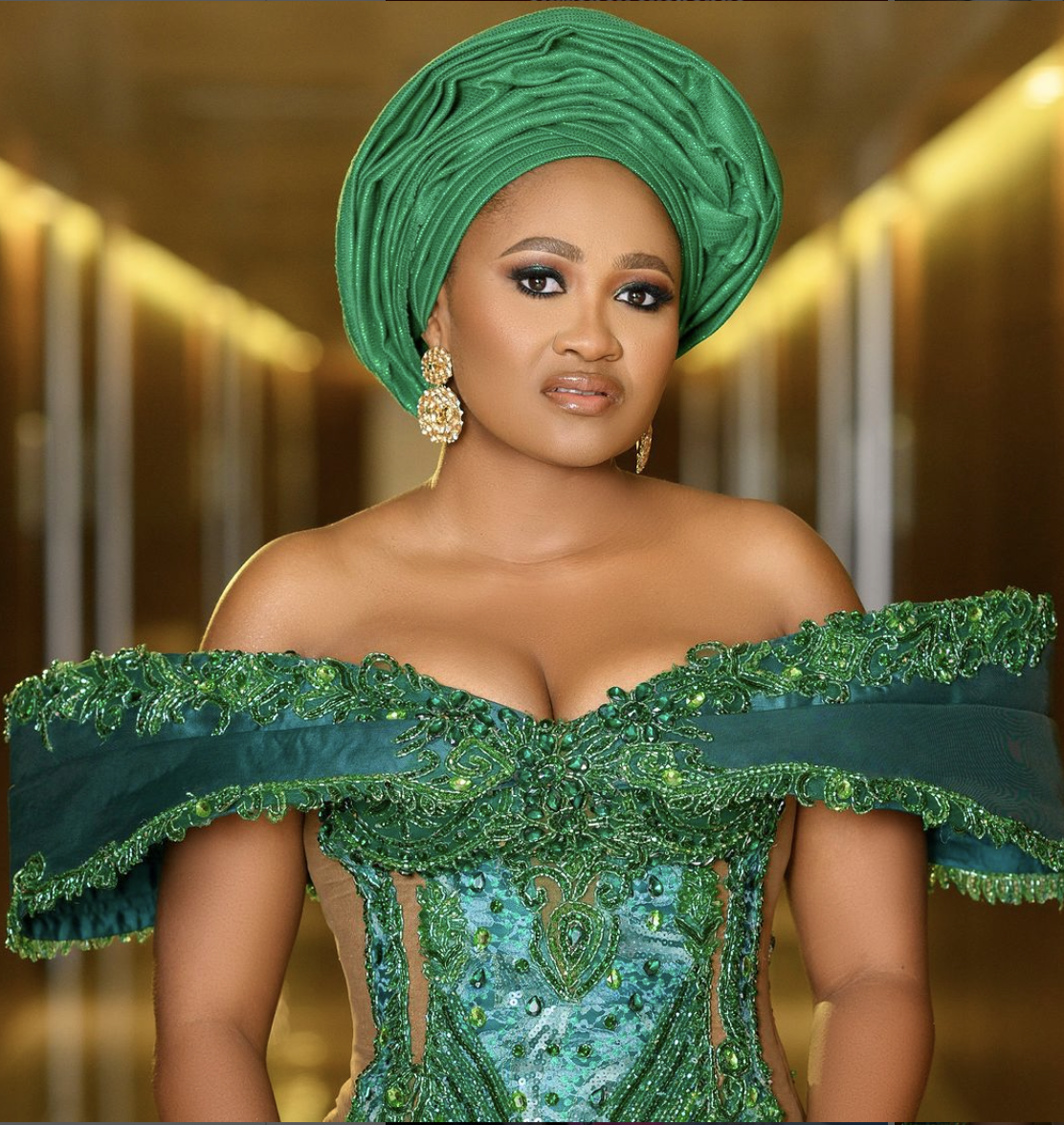
Mary Njoku challenges the ‘gold digger’ label against women, questioning why men benefiting from wealthy friends are judged differently for similar behaviour
Nollywood actress Mary Remmy Njoku challenged the “gold digger” label often directed at women who benefit from wealthy partners or friends on Friday, September 4, 2026, questioning why men who enjoy similar financial support are frequently described in more favourable terms.
Also read: Rita Edochie, Joke Silva Spark Buzz at Nollywood Premiere
Njoku raised the issue in a social media post while examining what she described as a double standard in how men and women are judged when they benefit from another person’s wealth.

The actress used the example of a wealthy man named Emeka, who she said returned home after becoming successful and had 17 grown men regularly around him.
According to Njoku, the men ate Emeka’s food, wore clothes he purchased, had their bills paid and enjoyed his money, yet their relationship with him was described as friendship, brotherhood, networking or loyalty.
“If benefiting from a wealthy person’s generosity makes a woman a gold digger, what exactly do we call the 17 men eating his food, wearing what he bought, enjoying his money and calling themselves his boys?” she asked.
Her argument centred on the language used to describe similar relationships involving men and women.
Njoku said women who remain close to wealthy individuals and receive financial support are often subjected to suspicion and criticism, while men in comparable situations can be viewed as loyal friends or members of a trusted social circle.
“The double standard isn’t that people love money. It’s that when men benefit from proximity to wealth, we give the behaviour a respectable name. When women do the same thing, we give it a dirty one,” she wrote.
The actress further argued that financial convenience can influence relationships regardless of gender.
She noted that men, women, friends, relatives and employees can all be attracted to people whose wealth or position makes life easier.
Njoku’s comments do not suggest that every relationship involving financial support is automatically healthy or genuine.
Instead, her central criticism is directed at what she sees as an uneven social standard in judging the motives of men and women.
The “gold digger” label is commonly used to accuse someone, particularly a woman in a romantic relationship, of pursuing another person primarily for financial gain.
Njoku’s intervention challenges whether that description is applied consistently when men receive comparable benefits from wealthy associates.
Her example of the 17 men also shifts the discussion away from romantic relationships and towards broader social networks, where financial assistance can be framed as friendship, loyalty or patronage.
The debate touches on a familiar feature of Nigerian social life, where successful individuals may provide financial support to relatives, friends, employees and members of their wider communities.
Such arrangements can carry different expectations, ranging from genuine generosity and friendship to professional networking and patronage.
Njoku’s point is that the label attached to those relationships can depend heavily on whether the beneficiary is a man or a woman.
The actress has previously used her social media platforms to comment on relationships, marriage, family and wider social issues, often prompting conversations among her followers.
Her latest remarks are likely to generate further debate about financial dependence, gender expectations and the assumptions people make about relationships involving wealthy individuals.
At the heart of Njoku’s argument is a question about consistency: if benefiting from another person’s generosity does not automatically make a man exploitative or opportunistic, she asks why women should face a harsher judgement for receiving similar support.
Also read: Rita Edochie, Joke Silva Spark Buzz at Nollywood Premiere
The discussion ultimately leaves room for a broader examination of how society defines friendship, loyalty, partnership and financial dependence, particularly when wealth creates an uneven balance between people.





Uzor Arukwe Reveals Why He Is Not a Marriage Advocate

Bisola Aiyeola Says Marriage Is Not Her Life’s Priority

Iyabo Ojo Takes Legal Action Against Lizzy Anjorin


-
 Nollywood4 weeks ago
Ikenga Becomes Highest-Grossing Igbo Film at ₦103.4m
-
 Celebrity news4 weeks ago
US Mission Pays Tribute to Late Actor Olu Jacobs
-

 Celebrity news3 weeks ago
Ugo Nwokolo Admits He Was Once a Promiscuous Man
-

 Nollywood4 weeks ago
Olu Jacobs: Family Fixes October 2 for Funeral
-

 Celebrity news4 weeks ago
Mosun Filani Reveals What Kept Her Away From Nollywood
-

 Nollywood3 weeks ago
Nkechi Blessing Suspends Movie Release After Actor Cjay Dies
-

 Celebrity opinion4 weeks ago
Omowunmi Dada: I Want a Husband Who Shares My Christian Faith
-

 Events4 weeks ago
Hamzat, Kola Adesina, Liakouris to Headline Real Talk With Kike @7