
Celebrity news
Uche Ogbodo’s Bold Surgery Claims Ignite Fresh Debate

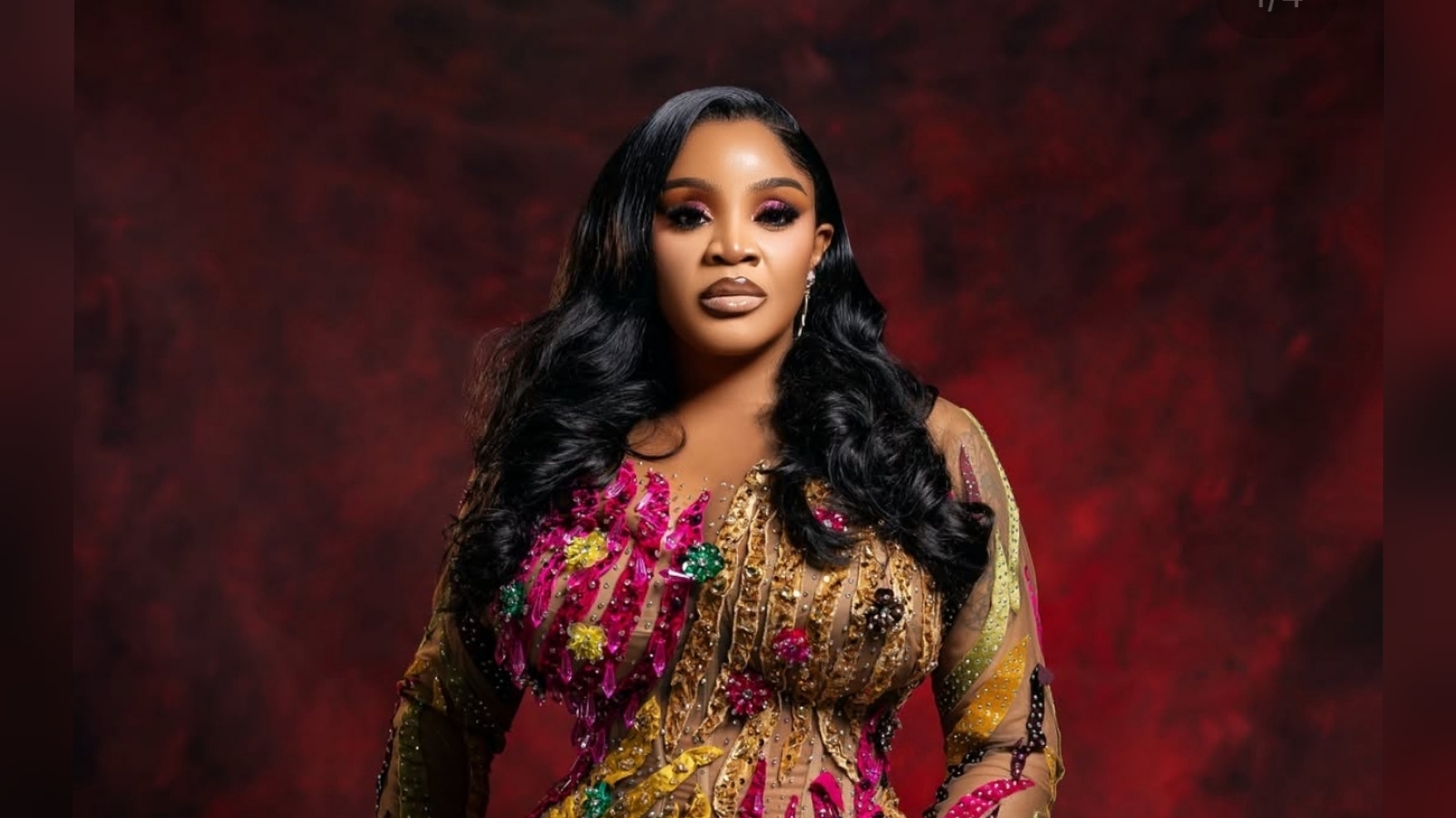
Uche Ogbodo plastic surgery claims spark debate as experts’ guidance highlights the risks and limits of cosmetic procedures
Nollywood actress and producer Uche Ogbodo, 40, has reignited public debate over cosmetic surgery after discussing liposuction, tummy tuck procedures and women’s sexual experiences during an appearance on the Awesome Family Podcast.
A;sp read: Doris Ogala Reveals Painful Reason Her Marriage Ended
Ogbodo, who has become an outspoken advocate for cosmetic procedures following her own body-enhancement journey, described liposuction as a relatively simple operation and said she considered a tummy tuck safer than a Caesarean section.
“Liposuction is not the riskiest surgery, it is actually a safe simple surgery,” Ogbodo said, according to reports of the podcast appearance. “Tummy tuck is safer than a Caesarian section to me.”
The actress also made the more striking claim that plastic surgery can restore a woman’s libido completely, saying she had become an advocate for the procedures and had developed an interest in helping women navigate cosmetic surgery in Nigeria.
The comments quickly drew mixed reactions online. Some social media users defended Ogbodo’s right to speak about her personal experience, while others questioned whether her enthusiasm for cosmetic procedures was being presented too broadly.
The debate is particularly sensitive because cosmetic surgery and sexual wellbeing are both deeply personal subjects.
A change in body shape can improve confidence for some people, but confidence, sexual desire and physical sexual function are not interchangeable.
There is also no established medical measure by which liposuction or a tummy tuck can be said to return a woman’s libido to “100 per cent”.
Sexual desire can be influenced by a wide range of factors, including psychological wellbeing, hormones, medication, relationship circumstances, pain, fatigue and other health conditions.
Medical guidance also gives a more cautious picture of the procedures Ogbodo discussed.
The American Society of Plastic Surgeons says liposuction carries potential complications including bleeding, infection, blood clots, fluid problems, changes in sensation, poor wound healing and injury to deeper structures.
The organisation similarly lists bleeding, infection, blood clots, fluid accumulation, nerve or sensation changes and wound-healing problems among the risks associated with abdominoplasty, commonly known as a tummy tuck.
That does not mean cosmetic surgery is inherently unsafe. Rather, the safety of an operation depends on factors including the patient’s health, the extent of surgery, anaesthesia, the surgical setting and the qualifications and experience of the medical team.
A previous analysis cited by the American Society of Plastic Surgeons also found that major complication rates could rise when abdominoplasty was combined with other procedures.
The study reported a 3.1 per cent rate for abdominoplasty alone in its database, compared with up to 10.4 per cent when abdominoplasty was combined with body contouring and liposuction.
The comparison with Caesarean delivery requires similar nuance.
The American College of Obstetricians and Gynecologists describes Caesarean birth as major surgery. Potential complications include infection, significant blood loss, blood clots, injury to nearby organs and anaesthetic complications. Recovery generally takes several weeks.
A Caesarean section, however, is usually performed because delivering the baby surgically is considered the safer option for the mother, baby or both in particular circumstances. That makes a simple comparison with elective cosmetic surgery difficult.
The two procedures also have fundamentally different purposes. A Caesarean involves incisions through the abdomen and uterus to deliver a baby, while a tummy tuck is intended to reshape the abdominal area by removing excess skin and fat and, in many cases, repairing or tightening weakened abdominal muscles.
Ogbodo’s own history helps explain why the subject has become such a prominent part of her public conversation.
The mother of three previously disclosed that she had undergone three Caesarean deliveries and said pregnancy and childbirth had significantly affected her body image.
In September 2025, she explained that her decision to undergo body-enhancement surgery was driven largely by how she felt about her body after having children.
“I didn’t have an hourglass shape. Starting to have babies didn’t help matters for me,” Ogbodo said at the time. “The surgery wasn’t for anyone else but for me, for my mental health, to feel good and enough.”
Her cosmetic journey subsequently included a Brazilian Butt Lift and tummy tuck in 2025.
She later announced plans for Lipo 360, a procedure designed to contour several areas of the body through liposuction.
By February 2026, Ogbodo was publicly describing herself as a strong supporter of women who choose cosmetic surgery, arguing that surgical enhancement could form part of a woman’s decision to feel more confident and comfortable with her appearance.
Her advocacy has since extended beyond her own procedures. In August 2026, Ogbodo also attracted attention after revealing another cosmetic intervention, this time a non-surgical facial rejuvenation involving threads, fillers and PDO treatment.
“I got me a new face because I can,” she wrote in a post reported by P.M. News. She added that she loved herself while believing that people could choose to improve features they were unhappy with.
That latest intervention added another layer to the conversation surrounding Ogbodo’s increasingly public relationship with aesthetic medicine.
For supporters, her openness challenges the secrecy that can surround celebrity cosmetic procedures.
For critics, the concern is whether personal success stories can inadvertently make invasive surgery appear more predictable or medically beneficial than the evidence supports.
The distinction matters particularly when sexual health enters the discussion.
A woman who experiences increased confidence after a body-contouring procedure may feel more comfortable with intimacy, but that does not establish that the operation itself has medically restored libido, arousal or vaginal lubrication.
Similarly, describing one operation as safer than another without specifying the individual patient, surgical technique and clinical circumstances can give audiences a misleading impression of relative risk.
Ogbodo’s comments have therefore opened a broader conversation that extends beyond celebrity culture.
They touch on motherhood, changing bodies, self-esteem, beauty standards and the growing visibility of cosmetic surgery among Nigerian women.
The most responsible conclusion may be neither an outright rejection of cosmetic surgery nor an unquestioning endorsement of it.
Cosmetic procedures can have meaningful personal benefits for some patients, but those benefits need to be weighed against real surgical risks and realistic expectations.
For women considering liposuction, abdominoplasty or related procedures, professional medical assessment remains essential.
The American Society of Plastic Surgeons advises prospective patients to discuss the risks directly with a qualified plastic surgeon and to make decisions based on individual circumstances rather than an expectation of guaranteed results.
Ogbodo’s experience may continue to inspire debate, but her personal account is ultimately just that: an individual experience.
A;sp read: Doris Ogala Reveals Painful Reason Her Marriage Ended
The evidence does not support treating cosmetic surgery as a guaranteed route to restored libido or as universally safer than Caesarean delivery.













Charles Inojie Explains Why God Created Side Chicks

Omotola Jalade Reveals How Fame Keeps Her From Market

‘Anu (Mercy)’ Wins Best Nollywood Film Award at TINFF 2026


-

 Celebrity news4 weeks ago
Nollywood showers love on Patience Ozokwor at 68
-

 Celebrity news4 weeks ago
Patience Ozokwo Asks Fans to Pray After Turning 68
-

 Celebrity news3 weeks ago
Adunni Ade Says Christian Fans Unfollowed Over Faith
-

 Celebrity news4 weeks ago
Stan Nze, Blessing Obasi Renew Vows on Fifth Anniversary
-

 celebrities4 weeks ago
Stella Damasus Sets Firm Standards for Daughter’s Future Partner
-

 Nollywood2 weeks ago
Ikenga Becomes Highest-Grossing Igbo Film at ₦103.4m
-

 Celebrity opinion4 weeks ago
Osuofia Will Turn Two Films Into Seven Unless You Direct Him Hard
-

 Celebrity news4 weeks ago
Rita Edochie Rejects Arthritis Claims After Dance Video