
celebrities
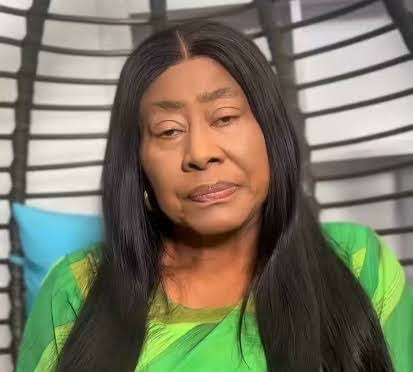
Omotola Questions Nollywood Over Missing Royalty Payments


Omotola Nollywood royalties debate grows as the veteran actress contrasts regular Hollywood residuals with 30 years without similar payments in Nollywood
Also read: Mo Bimpe Fires Back at Critics Over Viral Video
Jalade-Ekeinde made the disclosure while reflecting on the contrasting payment systems she has experienced in the two film industries.
“I’ve only worked in Hollywood for five years, yet I constantly receive envelopes containing my residuals and royalties. I’ve worked in Nollywood for 30 years and have never received a single envelope. Maybe they don’t know where I live,” she said.

The remark has reopened a longstanding conversation about how Nigerian actors benefit when films continue to generate value after their initial release.
Residuals generally refer to payments made to performers when qualifying film or television work is reused or distributed through additional channels.
Royalties can arise from contractual arrangements that allow performers or rights holders to receive continuing payments from the commercial use of their work.
Jalade-Ekeinde’s experience is particularly striking because of the scale of her Nollywood career.
The actress has previously said that she has appeared in more than 310 Nigerian productions over roughly three decades, yet received no residual payments from that body of work.
By contrast, Jalade-Ekeinde has said that her comparatively brief Hollywood experience generated recurring payments.
In 2025, she shared evidence of payments from SAG-AFTRA, the American union representing film and television performers, while contrasting those earnings with her much longer career in Nollywood.
Her latest comments therefore go beyond the question of individual pay. They highlight the wider systems required to track where productions are shown, how often they are reused and which performers or rights holders are entitled to continuing income.
The issue is not entirely new within Nollywood. In 2025, Jalade-Ekeinde publicly argued that the Nigerian industry needed stronger structures after comparing her Hollywood and Nollywood experiences.
The Association of Voice and Speech Trainers for Stage and Screen, AVRS, has also previously pointed to some of the practical challenges surrounding royalty collection in Nigeria.
According to Channels Television, AVRS chairman MCSN’s Tony Okoroji said the organisation had been distributing royalties, while acknowledging difficulties linked to industry infrastructure, copyright awareness and compliance.
The distinction is important because a conventional acting fee and a royalty are not the same thing. An actor may receive an agreed payment for appearing in a production without necessarily retaining a contractual entitlement to subsequent revenue generated by the work.
That distinction becomes increasingly significant as Nollywood’s films travel through cinemas, television networks, streaming services and other distribution channels.
Jalade-Ekeinde has previously taken a firm position on the issue. In a 2019 interview, the actress said she had begun insisting on royalty provisions in her contracts, arguing that performers should retain some benefit from work that continues to have commercial value.
Her latest intervention comes as Nollywood continues to expand its international reach, making questions around ownership, contracts, distribution and long-term compensation increasingly important to the industry’s sustainability.
For Jalade-Ekeinde, the contrast between Hollywood and Nollywood has become a powerful illustration of what she believes remains missing from Nigeria’s entertainment ecosystem.
Also read: Mo Bimpe Fires Back at Critics Over Viral Video
Her comments are likely to renew discussion among actors, producers, guilds and rights organisations about whether the industry’s existing systems are sufficiently equipped to ensure that performers can benefit from the enduring success of their work.






Celebrity lifestyle
Funke Akindele, Iyabo Ojo, Others React as Bimbo Ademoye, Timini Egbuson Twin in New Denim Photos



Uzor Arukwe Reveals Why He Is Not a Marriage Advocate

Bisola Aiyeola Says Marriage Is Not Her Life’s Priority

Iyabo Ojo Takes Legal Action Against Lizzy Anjorin


-

 Nollywood4 weeks ago
Ikenga Becomes Highest-Grossing Igbo Film at ₦103.4m
-
 Nollywood4 weeks ago
Olu Jacobs: Family Fixes October 2 for Funeral
-

 Celebrity news4 weeks ago
Mosun Filani Reveals What Kept Her Away From Nollywood
-

 Celebrity news4 weeks ago
Ugo Nwokolo Admits He Was Once a Promiscuous Man
-

 Events4 weeks ago
Hamzat, Kola Adesina, Liakouris to Headline Real Talk With Kike @7
-

 Nollywood3 weeks ago
Nkechi Blessing Suspends Movie Release After Actor Cjay Dies
-

 Celebrity opinion4 weeks ago
Omowunmi Dada: I Want a Husband Who Shares My Christian Faith
-

 Celebrity news3 weeks ago
Bimbo Ademoye Explains Viral Wedding Photos With Timini Egbuson