
Nollywood
Filmmakers make strong case for AI in Nollywood


AI in Nollywood gains momentum as Tanwa Hameed and Mysterious Tech Studio urge government support after completing a Yoruba AI feature film
Yoruba Nollywood actress and filmmaker Tanwa Hameed, popularly known as Asake Omogbajumo, and Mysterious Tech Studio have called on the Federal Government to create a supportive policy and technology environment for artificial intelligence in Nigeria’s film industry, following the completion of their Yoruba-language science-fiction feature, Asiri Ilu Awon Osu (Mystery of Osu Land).
Also read: Blessing Obasi Pens Heartfelt Note After Son’s Birthday
The two-part production, completed in Ibadan, combines AI-generated imagery with live-action performances and human direction.

The filmmakers say about 80 per cent of the film’s visuals were created with advanced AI tools, while the remaining 20 per cent involved human creative input.
The project, which runs for more than three hours, places Yoruba culture at the centre of a science-fiction story exploring society, power and humanity.
Its creators say the production demonstrates how emerging technology can expand the scale of African storytelling without stripping it of its cultural identity.
Available industry records also list Hameed as part of the film’s cast, playing General Asake, while the production has a substantial ensemble cast.
The filmmakers said the project was developed over three months between June and September 2025.
Rather than presenting AI as a substitute for actors and other professionals, they described the technology as an additional creative instrument that can help filmmakers overcome some of the financial and logistical barriers associated with conventional production.
That distinction is important in an industry where the cost of equipment, locations, crews and visual effects can limit the scale of independent productions.
The creators are now urging the government and other stakeholders to respond to the rapid development of AI with policies that encourage responsible experimentation, digital infrastructure and skills development.
“We further urge the Federal Government and relevant stakeholders to pay greater attention to the emerging intersection between technology and the creative industry by supporting innovation, providing access to digital infrastructure and creating policies that would enable Nigerian filmmakers to explore AI responsibly,” the filmmakers said.
Their argument is that wider access to AI tools could allow Nigerian filmmakers to attempt more ambitious productions without requiring the resources traditionally associated with large-scale cinema.
For Nollywood, the implications could extend beyond production costs. AI-assisted filmmaking could make it easier to create elaborate environments, visual effects and locations that might otherwise be prohibitively expensive, while allowing indigenous stories to be developed for audiences beyond Nigeria.
The project also carries an unusual chapter in its history.
In October 2025, the filmmakers submitted Asiri Ilu Awon Osu to Guinness World Records under a proposed category for the longest cinematic film co-created by AI and a human director.
Guinness World Records subsequently declined the application on January 27, 2026, after a three-month review, saying the proposed category had not been formally established.
The decision did not amount to a finding that the film itself did not exist or had failed to meet a production standard.
The filmmakers responded by maintaining that the absence of a Guinness category did not diminish what they believed the production represented.
“The title rejection does not change reality. The film exists. It was completed. And it was done first,” they said.
Independent industry listings now identify the film as a completed 2026 production, with Tanwa Hameed among its cast and Adeniyi Bukola listed as a co-director.
The filmmakers’ broader message is therefore less about a record and more about access.
They believe AI could help Nigerian creators compete in an increasingly technology-driven global entertainment market while retaining local languages, traditions and creative voices.
They also stressed that the human element remains central to their approach. Voices, performances, direction and storytelling were combined with digitally generated imagery, creating a hybrid model rather than a production built entirely by machines.
That approach could become increasingly relevant as the global film industry debates the creative, economic and ethical implications of generative AI, including questions around authorship, consent, copyright and the future role of performers.
For Nigeria, the filmmakers argue that avoiding the technology would be a missed opportunity. With appropriate safeguards, they believe AI could become a powerful tool for independent producers and help indigenous stories travel further.
Mystery of Osu Land is expected to pursue a wider release aimed at audiences, critics, researchers and technology innovators.
Also read: Debbie Shokoya Celebrates Husband With Sweet Birthday Tribute
Its emergence offers Nollywood an early glimpse of how traditional storytelling and new technology might work together, while leaving the larger question of regulation and industry standards firmly in the hands of policymakers and creative stakeholders.











Charles Inojie Explains Why God Created Side Chicks

Omotola Jalade Reveals How Fame Keeps Her From Market

‘Anu (Mercy)’ Wins Best Nollywood Film Award at TINFF 2026


-

 Celebrity news4 weeks ago
Nollywood showers love on Patience Ozokwor at 68
-

 Celebrity news3 weeks ago
Patience Ozokwo Asks Fans to Pray After Turning 68
-

 Celebrity news3 weeks ago
Adunni Ade Says Christian Fans Unfollowed Over Faith
-

 Celebrity news4 weeks ago
Stan Nze, Blessing Obasi Renew Vows on Fifth Anniversary
-

 celebrities4 weeks ago
Stella Damasus Sets Firm Standards for Daughter’s Future Partner
-

 Nollywood2 weeks ago
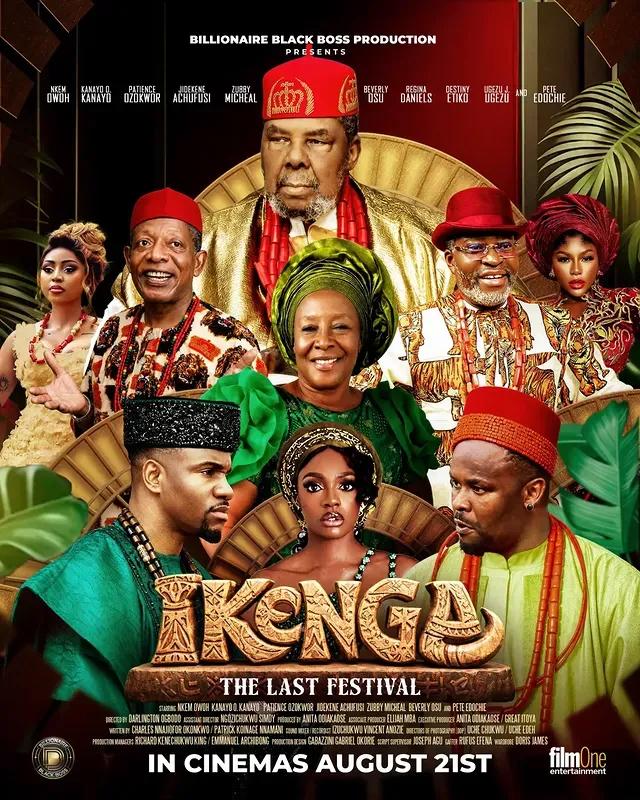
Ikenga Becomes Highest-Grossing Igbo Film at ₦103.4m
-

 Celebrity opinion3 weeks ago
Osuofia Will Turn Two Films Into Seven Unless You Direct Him Hard
-

 Celebrity news4 weeks ago
Rita Edochie Rejects Arthritis Claims After Dance Video